
Harding Releases From Lea Detention
Lea County Detention Center is a real county detention facility in Lovington and a documented contract option for Harding County detainees. A person can leave after a court orders pretrial release, after completing a local sentence, or through a transfer to another authority. Only the first two may end with the person in the community. A transfer closes one custody stage while another begins.
Ask the facility record to show the booking number, booking date, release date and time, release authority or type, and final destination. The code or narrative for the last movement matters most. A transfer to NMCD, another county, juvenile authority, federal custody, immigration custody, or medical custody should never be rewritten as a community release.
| Recorded endpoint | What it means | Next check |
|---|---|---|
| Court-ordered release | Detention ended under a court order | Read the Harding court docket and release entry |
| Sentence completion | The local detention term ended | Confirm the final disposition and any supervision |
| NMCD transfer | State custody began or continued | Use the NMCD offender search after intake |
| Other-agency transfer | Custody changed hands | Use the receiving agency’s locator or records office |
The Harding County released-inmate search provides the broader records path when the correct custodian is still unknown. Begin with the actual holder, not the county name printed on the court case.
Confirm Lea Detention Release Records
The official Lea detainee roster is current-only. It may help confirm that a person appears in custody at the time of the check, but it is not a release archive. Once a name disappears, the historical booking and movement record must explain why. Use the person’s full name and as many event identifiers as possible.
- Ask the Harding County Sheriff which facility received the person after arrest or temporary holding.
- Check the official Lea roster only if Lea County is the confirmed or likely holder.
- Record the Inmate ID and exact name while the entry is visible.
- Request the complete booking episode, release screen, and movement history from Lea County.
- Compare the final event with the Harding court order or disposition.
- If the event is a transfer, continue with the receiving agency instead of stopping the search.
For a state-prison transfer, the NMCD offender search becomes relevant only after commitment and intake. NMCD says it has no jurisdiction over county detention, and state prison data may take 24 hours to appear. A federal or immigration transfer requires the receiving federal locator rather than an NMCD search.
Lea Detention’s Current Roster
Lea County labels its official interface an “Automated System.” The page is dated, but the official sources reviewed do not promise a refresh schedule, removal time, or post-release retention period. It offers no 24-hour or 72-hour released-person view. The table carries only three fields: Inmate ID, Last Name, and First Name.
The official Lea County detainee roster demonstrates those narrow fields and its current-custody focus.
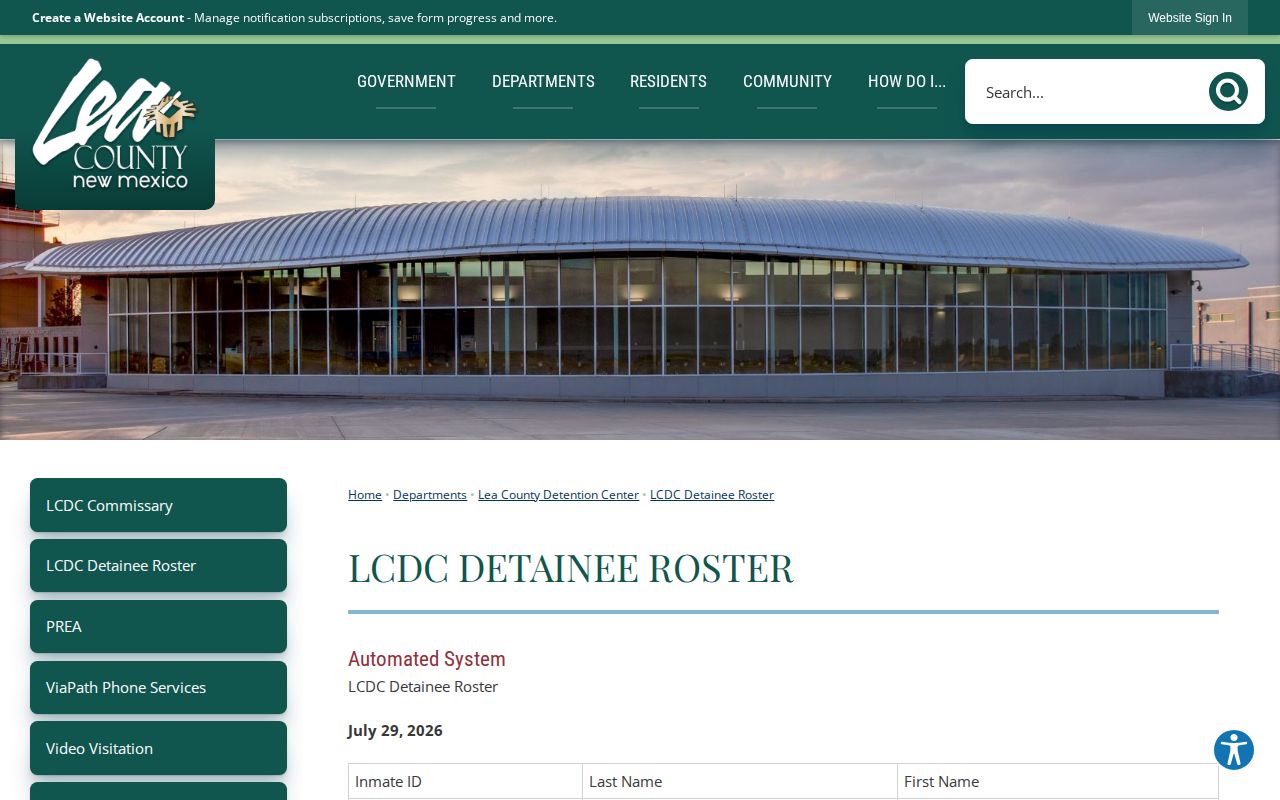
The roster does not show booking date, release date, arresting agency, charge, bond, status, destination, photograph, detail page, or archive. It should be used as a discovery step, not final release evidence.
Note: No official source states how long a Lea roster entry remains visible after a movement, so request the historical record promptly.
Lea Detention Records Contact
The facility administration line can confirm where to route a detention question, while Lea County’s public-information route handles the records request. Ask for a complete episode rather than only a screenshot of the final roster state. Include the Harding arresting agency and court case number when known because those details help separate a Harding-origin case from other Lea bookings.
The official facility page identifies Lea County Detention Center and its published contacts.
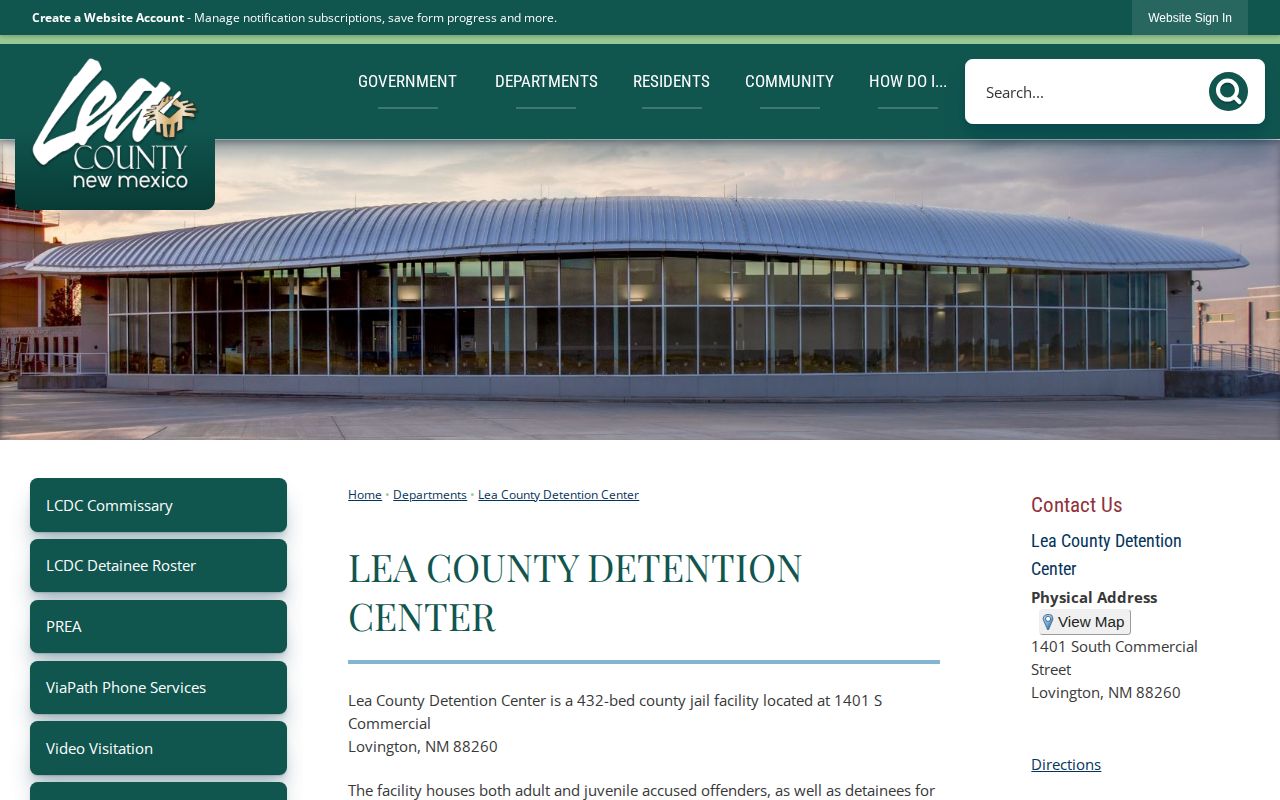
The facility identity page confirms the operator and location, which should be checked before sending sensitive event identifiers to a records custodian.
Lea County Detention Center
1401 South Commercial Street
Lovington, NM 88260
Administration: 575-396-8669
Adult Records fax: 575-396-8506
Records email: recordsrequest@leacounty.net
If Lea County says the person was never admitted, return to the Harding Sheriff and court record. The agreement is space-available, so another holder may have been used for that episode.
New Mexico’s current functional retention schedule provides that a jail inmate file is destroyed five years after the file closes. That retention rule explains why a historical Lea record may remain with the custodian after the name leaves the website. It does not guarantee that every field is open. Juvenile, expunged, and other protected material may still be withheld or redacted under the governing law.
Harding County Has No Jail
The absence of a Harding County detention facility is the central local fact. The Harding County Sheriff makes arrests, keeps local law-enforcement records, and may hold a person briefly for processing. Continued detention requires transport to a facility operated elsewhere. Leaving the sheriff’s immediate control can therefore mean transport, not release.
New Mexico Counties directly confirms that Harding County does not have a detention center. A statewide facility report also identified Harding among the counties with neither an adult prison nor an adult detention facility. Commercial directories that label the Mosquero sheriff address as a Harding detention center conflict with those direct sources.
The first useful question is simple: which agency physically housed the person on the date at issue? The sheriff’s arrest or transport record, court commitment, and receiving-jail booking entry can answer it. Only then should a release request be sent to Lea County or another holder.
The Harding Sheriff’s official contact is 575-673-2231 at 35 Pine Street in Mosquero. Ask for the receiving facility, transport date, and any releasable transfer or property record tied to the event. The sheriff is the local routing point, not a substitute for the booking jail’s complete detention file.
Harding-Lea Detention Agreement
A Lea County resolution dated September 26, 2024 authorizes space-available housing for Harding County adult and juvenile detainees. The supporting material lists a rate of $150 per adult day and $300 per juvenile day, with a renewal option that may not exceed four years. Those figures describe the government housing arrangement. They are not charges assessed to a released person.
The Harding-Lea housing resolution proves a placement pathway. It does not create a dedicated Harding wing, a Harding filter on the roster, or proof that every person arrested in Harding went to Lea County. Availability and the facts of the individual case still control.
An old Harding audit also reported that Colfax County housed Harding prisoners from time to time, but that historic reference does not support current directions. Do not use it to guess a present holder. Confirm the agency for the specific episode.
Lea Release Versus Transfer
A community release ends detention at Lea without a new custodial handoff. A transfer changes the holder. Both events can remove a name from the current roster, which is why a missing name is ambiguous. The final movement field and destination are more useful than the roster’s present state.
- Release authority
- The court order, sentence completion, or other lawful basis recorded for leaving detention.
- Movement history
- The sequence of admissions, internal changes, and departures tied to the booking episode.
- Transfer
- A handoff to another custodian rather than release to the community.
- Detainer
- A request or hold that may cause another authority to take custody after the local case changes.
If NMCD receives the person, use its statewide search after the stated lag and verify with the institution. If the U.S. Marshals Service or another federal authority receives the person, use that agency’s records and locator. A USMS detainee can be housed in a county facility without becoming a county-sentenced inmate.
Note: Ask for both the release type and destination because a transfer date may look like release unless the receiving authority is recorded.
Lea Detention Center History
The official facility page describes a 432-bed center that houses adults, juveniles, and U.S. Marshals Service detainees. Capacity and population type explain why the facility can serve more than one legal system. They do not show where a particular Harding detainee was held or how that person left.
The older courthouse jail closed on December 8, 1984. Groundbreaking for the present facility took place on November 25, 2003, and detainees moved into it on October 5, 2005. Those milestones identify the facility record series and help distinguish old Lea County jail references from records created at the current center.
For a Harding release check, history is secondary to identity. Match the person, booking episode, originating agency, and court case. Then verify the final movement with Lea County and any receiving authority. That chain answers where the person went and whether the last event was true community release.