
Harding Release Mugshot Records
A booking photo records appearance during a specific arrest or custody episode. It is not a release certificate. The Harding County Sheriff may possess an arrest or transport image, Lea County Detention Center may hold a booking image from admission there, and NMCD may hold a later offender image after state commitment. Those photographs are not interchangeable even when they show the same person.
New Mexico’s Inspection of Public Records Act, NMSA 1978 Sections 14-2-1 through 14-2-12, governs requests to public agencies. Section 14-2-1.2 states the general public-record rule for law-enforcement records while allowing protected material to be redacted in writing or digitally obscured in an image. Juvenile records, expunged material, protected addresses, victim or witness details, and security-sensitive content may be withheld or masked.
The practical request is narrow. Name the person and custody episode, then seek the releasable booking image with lawful redactions. Do not claim that every Harding County mugshot must be open in full. When access is denied, ask for a written response that identifies the legal basis.
Where Harding Release Mugshots Appear
First determine who booked the person. Harding’s lack of a detention center means the county name alone does not identify the photo custodian. The September 2024 housing agreement makes Lea County Detention Center a documented, space-available option, but it does not prove that every Harding detainee went to Lovington. The sheriff can identify the receiving facility for the event.
| Channel | Photo status | Access path |
|---|---|---|
| Harding Sheriff | May hold an arrest or transport image | Ask the sheriff about the named incident and receiving jail |
| Harding jail release feed | None exists | Harding County operates no detention facility |
| Lea County detention record | Booking image may be held in the episode file | Request it from Lea County for a confirmed admission |
| NMCD offender record | A current operational photo is required near release | Check the official record or use NMCD’s IPRA route |
| Court or agency press material | May include an event photo | Read the dated official caption and source |
| Commercial repost | May be stale or misidentified | No commercial source is linked or recommended |
VINELink is a custody-notification layer, not a verified Harding booking-photo archive. OffenderWatch is limited to qualifying registrants. Neither should be presented as a general gallery of people released from Harding County cases.
No Harding Mugshot Feed
The Harding County Sheriff’s official page provides agency contacts and an OffenderWatch link. It does not provide a jail roster, booking-photo gallery, recent-release photo stream, mobile jail app, or official social release feed. Footer sharing controls on a county page are not sheriff social accounts. A missing feature should not be replaced with an unofficial source.
OffenderWatch covers only people who must register under the governing law. It cannot confirm that a person was booked in a given Harding case, that the displayed image belongs to the final detention episode, or that the person was released. The official Harding County 24-hour release route explains why a records request is needed when no feed exists.
Lea County’s official detainee roster is also a poor photo source. Its dated, current-only table shows Inmate ID, last name, and first name. It contains no photograph, release date, status, disposition, detail page, or archive. Disappearance from that roster may reflect release, transfer, correction, or an update.
Note: A current roster can identify possible custody, but a released person’s image and release event require the historical episode record.
Request Harding Booking Photos
A photo request belongs with the agency that created the image. Start with the Harding Sheriff when the receiving jail is unknown. If the person was admitted at Lea County Detention Center, send the booking-photo request to Lea County. For a later state-prison episode, use NMCD. One broad request to Harding County cannot compel another public body to search its own files.
- Identify the person by full name and include an approximate arrest or booking date.
- Add the booking number, Harding incident number, or court case number when known.
- Ask the sheriff which agency performed the booking and held the person.
- Request the specific booking photograph and the related booking and release fields from that custodian.
- State that segregable records with lawful redactions are acceptable.
- If access is denied, ask for the written basis and the exemption relied upon.
The Lea County Detention Center route uses recordsrequest@leacounty.net. The facility is at 1401 South Commercial Street in Lovington, and administration is 575-396-8669. A complete episode should distinguish community release from a transfer to NMCD, another county, federal authority, immigration custody, medical custody, or a juvenile authority.
The broader Harding County released-inmate record path helps pair the requested image with the final release and court disposition. That pairing prevents an arrest photo from being mistaken for proof of a later outcome.
NMCD Harding Release Photos
NMCD’s official Release Checklist requires a current photograph from its offender-management system within 90 days of release. That rule proves an operational state-custody image exists in the underlying NMCD file. It does not prove that every inactive public search result shows the photo, or that every requested image must be released without redaction.
For a Harding-origin case that led to state prison, first try the official NMCD search with Include Inactive. Compare the NMCD number and identity fields. If the public result does not show a photograph, use the NMCD NextRequest portal to seek the releasable offender photo tied to the final state-custody episode. County detention and state prison remain separate.
A local news image or official press photo proves only what its dated caption says. Commercial arrest and mugshot reposts are even weaker release evidence. They may omit dismissal, transfer, actual release, or a later expungement. No commercial mugshot, data-broker, or removal-service link belongs in the verification chain.
Harding Mugshots After Expungement
New Mexico’s Criminal Record Expungement Act has operated since January 1, 2020. The implementing rule defines arrest records to include photographs and booking sheets. It also reaches covered records on public court, corrections, and law-enforcement websites when describing removal from general-public access. A lawful order can therefore affect more than a docket line.
The New Mexico DPS expungement overview describes the official arrest-record context. Its screen reinforces that a photo issue belongs within the state’s record process, not with an unofficial repost.
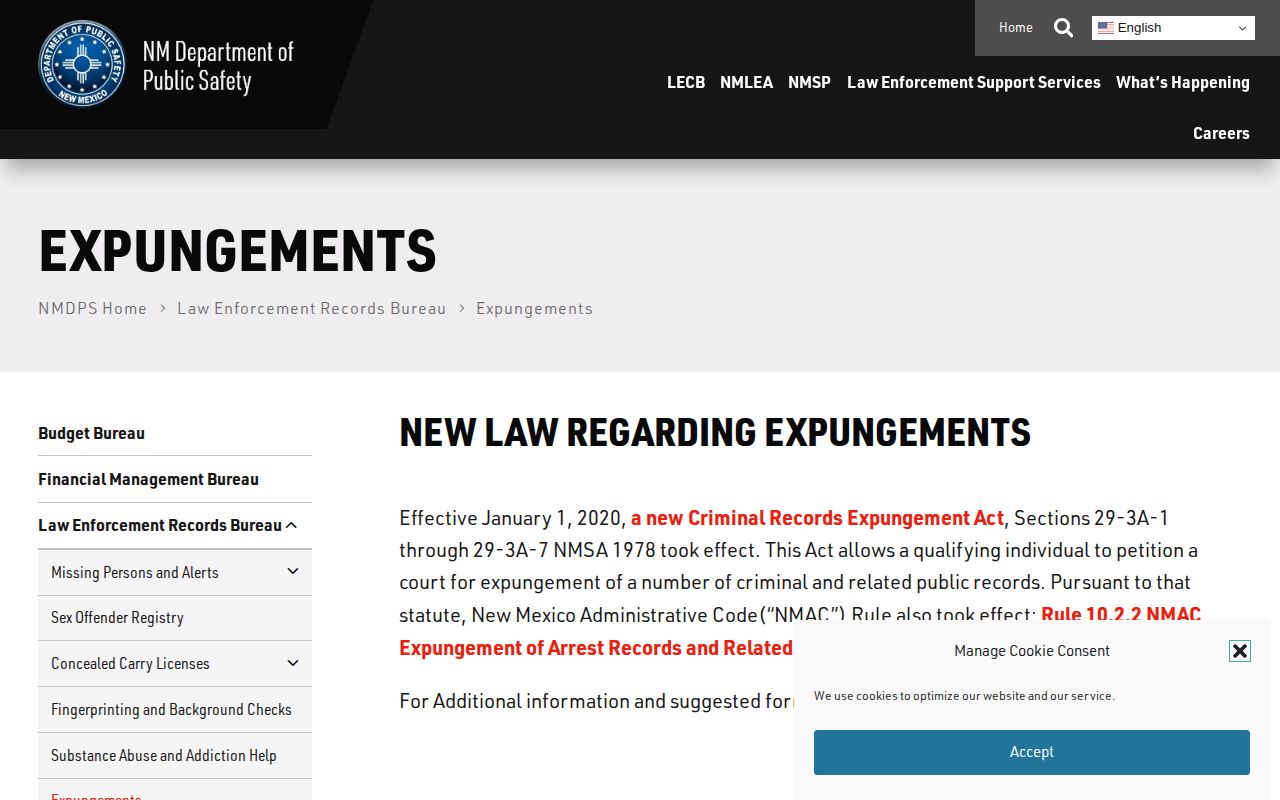
The official definition matters in Harding County because more than one agency may hold the same episode’s records. The order may need to reach the sheriff, actual booking jail, court, NMCD, or other repository named in it.
New Mexico Courts provides separate petition forms, including routes for release without conviction and for qualifying convictions. The court expungement hub supplies the current forms and process.
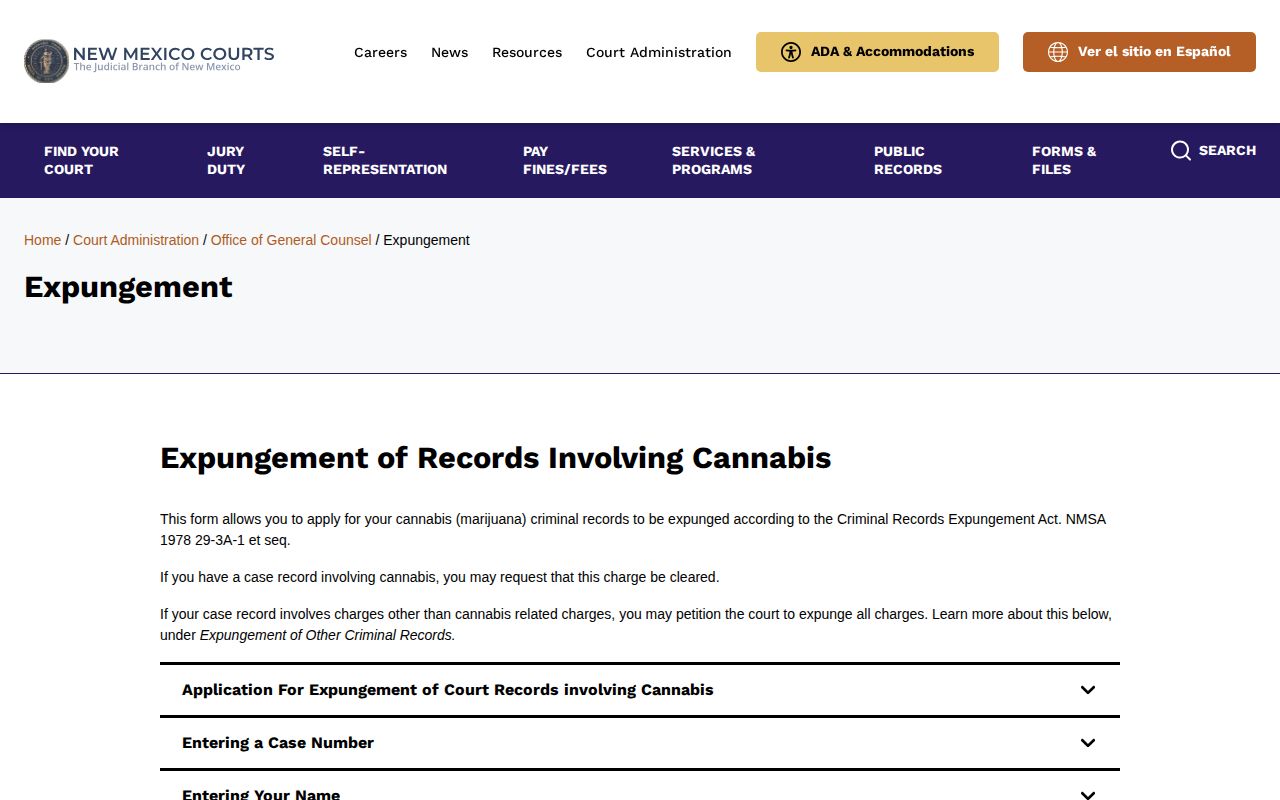
The forms do not guarantee eligibility or an order. They identify the lawful court route for a person seeking relief.
For release without conviction, Section 29-3A-4 provides a petition route one year after final disposition in the originating district. The listed outcomes include acquittal, dismissal, preprosecution diversion, conditional discharge, and proceedings otherwise discharged. Conviction-based petitions follow different waiting periods and exclusions under Section 29-3A-5. The court weighs the statutory factors and any objections, so an old photo’s age alone does not decide access.
When an order is entered, Section 29-3A-7 governs its effect. Relevant courts and law-enforcement agencies are barred from releasing the covered records except by court order. A person should review which repositories the order reaches and use the court’s process rather than assuming a single removal request reaches every copy. Harding’s sheriff record, the actual booking-jail image, a court file, and an NMCD image may sit with different custodians.
FCRA prohibition: Harding County Released Inmates is not a consumer reporting agency. Mugshot information may not be used for credit, employment, tenant, insurance, or any other purpose governed by the Fair Credit Reporting Act.
Harding Official Mugshot Policy
Harding County’s distinctive photo policy is defined by the lack of a jail. There is no authentic Harding recent-release mugshot stream to search. The image must be traced to its creating agency, and each agency’s photo marks a different custody stage. A sheriff arrest image, Lea booking image, and NMCD release-checklist image may all have separate dates and identifiers.
No state-specific New Mexico anti-pay-to-remove provision was verified in the official-source review. That limited finding should not be restated as a claim that no law exists. The confirmed rules are IPRA, lawful redaction, agency retention, and court-ordered expungement. Paying a reposting service is not an official correction and does not alter the source record.
When an official image is wrong, identify the exact record and ask the creating agency to review it. When an expungement order applies, follow the order and the court process for each named repository. Do not rebuild a removed official page from an old commercial copy. The current agency and court record control.
Retention and public display are also different. A custodian may still hold a closed file after its web entry is gone. New Mexico’s state schedule calls for a jail inmate file to be retained until five years after closure, subject to the schedule and the responsible agency. Continued retention does not cancel an exemption, redaction, or expungement order.
Verify Harding Release Beyond Photos
A face image can help distinguish people with similar names, but it cannot show the legal endpoint. Confirm the booking number, booking date, release date and time, release authority or type, and final destination. For a Lea County episode, determine whether the record says community release or transfer. For state custody, distinguish parole from discharge and from discharge to probation.
Then read the Harding court case for the order or disposition. A court record may outlive a current roster entry, though it may not show the exact moment the person left the building. Pairing the photo, booking or offender identifier, final movement record, and court disposition creates a far stronger match than relying on an undated image.
Note: An official booking photo proves an identified custody episode, while the release entry and court or NMCD disposition establish what followed.